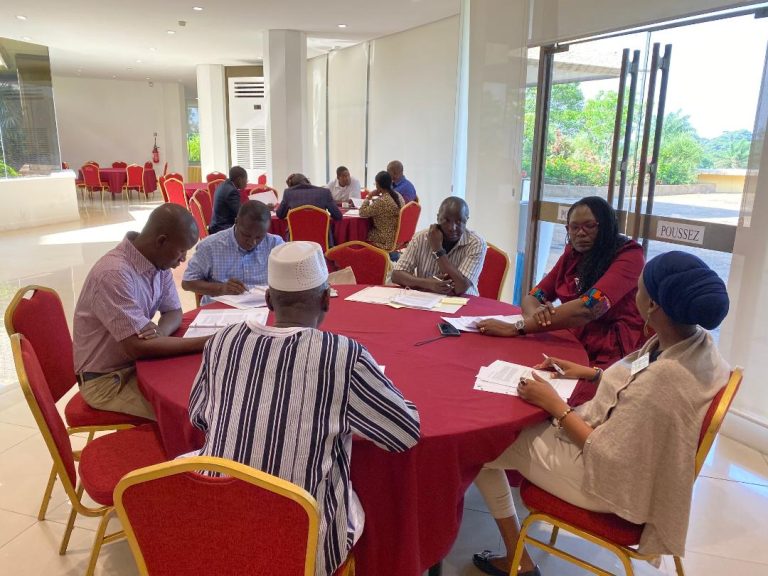
Nous mettrons en place une infrastructure PDNA Génomique pour le contrôle des maladies infectieuses et la préparation aux épidémies-GIDEP (PDNA-GIDEP) au Mali pour servir non seulement le Mali mais aussi les autres pays PDNA, principalement les pays francophones et lusophones.
Nous mettrons en place une nouvelle installation de génomique avec un système de gouvernance flexible susceptible de répondre principalement aux besoins des pays membres de notre réseau. L’installation sera dotée d’un équipement et d’une infrastructure de base en biologie moléculaire et en génomique.
Nous fournirons une formation ciblée en classe et une formation pratique en biologie moléculaire, en séquençage de pathogènes et en épidémiologie génétique.
Nous entreprendrons plusieurs études sur le paludisme, le Covid-19, la résistance aux antimicrobiens, etc. qui démontreront comment on peut utiliser l’épidémiologie moléculaire dans le contexte de la gestion des maladies infectieuses par les autorités de santé publique.
Nous tirerons parti de notre expérience en matière de collaboration avec le public et les programmes nationaux de lutte contre le paludisme dans le contexte de notre travail sur le paludisme pour étendre nos interactions à d’autres responsables de la santé publique traitant d’autres agents pathogènes.
Cette bourse sera l’occasion pour le boursier de suivre une formation formelle en leadership et en communication scientifique

Pr. Abdoulaye DJIMDÉ
Career path
- PDNA President
- Director of MRTC-Parasito
- Director of DELGEME
- Head, Molecular Epidemiology and Drug Resistance Unit
- Level: PharmD, PhD, FAAS, FMAS
- CAMES Professor, Parasitology-Mycology
- Pharmacist
Contact Info
BIO
PharmD, PhD, FAAS
Molecular Epidemiology and Drug Resistance Unit, Malaria Research and Training Center, Faculty of Pharmacy, University of Science, Techniques and Technologies of Bamako-Mali
Abdoulaye Djimde received a PharmD degree from Ecole Nationale de Medecine et de Pharmacie of Bamako, Mali in 1988, a PhD in Microbiology and Immunology from University of Maryland, Baltimore, Maryland, USA in 2001 and is Associate Professor of Parasitology-Mycology since 2012. He is currently Head of the Molecular Epidemiology and Drug Resistance Unit of the Malaria Research and Training Center, University of Science, Techniques and Technologies of Bamako, Mali. The primary goal of his research is to understand how the malaria parasite becomes resistant to antimalarial drugs and how that resistance spreads over time and space. With his team and collaborators he conduct field and laboratory based analyses to explore how genetic events in the malaria parasite, the human host and the mosquito vector’s genomes relate to treatment outcome and the spread of drug resistance.
In addition to his own research, he was instrumental in the formation of the Worldwide Antimalarial Drug Resistance Network and served on its Scientific Advisory Board for several years. He was appointed as Chair of the Multilateral Initiative on Malaria Task Force within WHO-TDR. In 2009, he was appointed as one of two International Fellows at the Wellcome Trust Sanger Institute. He currently serves as coordinator of the West African Network for Clinical Trials of Antimalarial Drugs (WANECAM) and Leader of the Plasmodium Diversity Network-Africa (PDNA). He is the Founding President of the African Association for research and control of AntiMicrobial Resistance (AAAMR www.africaamr.org ) and Directeur of Developing Excellence in Leadership and Genetics Training for Malaria Elimination in sub-Saharan Africa (DELGEME, www.delgeme.org).
He has co authored over 135 peer reviewed scientific publications (https://www.ncbi.nlm.nih.gov/pubmed/?term=Djimde+a.%2C).
List of publications: https://www.ncbi.nlm.nih.gov/pubmed/?term=Djimde+a.%2C
LinkedIn Profil: https://www.linkedin.com/in/abdoulaye-djimde-6b983173/
Research Gate Profil: https://www.researchgate.net/profile/Abdoulaye_Djimde
The achievements of the Director: https://www.youtube.com/watch?v=8rthby3JJ4A

Yavo WILLIAM
Career path
- PDNA Vice President
- Pharmacist
Contact Info
BIO
PharmD, PhD
Parasitology and Mycology, UFR Pharmacie Head of the Malaria Research and Control Center
University Félix Houphouët-Boigny.
Professor of Parasitology-Mycology, Faculty of Pharmacy, University Félix Houphouët-Boigny.
Head of the Malaria Research and Control Center, National Institute of Public Health, Côte d’Ivoire.
Deputy Director of Training and Research of the National Institute of Public Health, Côte d’Ivoire.
1rst Vice-President of the African Association for research and control of AntiMicrobial Resistance (AAAMR).
In addition to William’s posts at the National Institute of Public Health and the University Félix Houphouët Boigny, was an expert for the redaction of the National Policy Document of Health Research in Côte d’Ivoire. In addtion, he is a member of Scientific Advisory Board of the National Malaria Control of Côte d’Ivoire and the 1rst Vice-President of the Ivorian Society of Parasitology and Mycology. One of William’s main research themes is to assess antimalarial drug resistance in Plasmodium falciparum by comparing genetic diversity in conjunction with epidemiological factors and identifying genetic profiles which influence malaria treatment outcome. The aim is to implement an improved program for monitoring drug-resistant malaria in order to plan and adopt appropriate strategies to control the disease. William is also a member of the Plasmodium Diversity Network Africa (PDNA) and Chairman of the Project Management Board of DELGEME.
Oumou MAIGA
Career path
- PDNA Secretary General
- Biologist
Contact Info
BIO
PhD, MSc
Kumasi Centre for Collaborative Research (KCCR)
Research interest:
Oumou’s research interests lie primarily in the molecular resistance of antimalarial drugs identified by studying the genetic diversity and population structure of Plasmodium falciparum and isolating signatures of natural selection.
Research conducted at my institution:
From BNITM, Oumou is on secondment at the African partner site KCCR in Kumasi, Ghana where she is coordinating projects on malaria gametocyte dynamics and on the impact of NTDs on malaria incidence and transmission.

Ben Andagalu
Career path
- PDNA Deputy Secretary General
- Physician
Contact Info
BIO
USAMRD-K MISSION
Develop and test improved means for predicting, detecting, preventing, and treating infectious disease threats to U.S. military personnel and the host nation
Conduct surveillance, training, research, and response activities related to emerging infectious disease threats.
Partner in executing the President’s Emergency Plan for AIDS Relief (PEPFAR) and the President’s Malaria Initiative (PMI).
Support the AFRICOM Commander’s Health Related Theater Security Cooperation activities through engagement of nations in the region in executing our mission.
Malaria Drug Resistance (MDR) Lab Overview
The Malaria Drug Resistance (MDR) laboratory conducts aggressive surveillance for the anti-malarial drug susceptibility profiles using a myriad of techniques, including traditional in vitro susceptibility testing, in vivo efficacy studies and next generation genetic analyses. In addition to generating valuable epidemiological data, these efforts support numerous research objectives of our KEMRI/USAMRD-K partners and collaborators, and provides timely information to US DoD and Kenya public health authorities to inform drug policy decisions on the optimal use of anti-malarials. The MDR laboratory is subdivided into three sections, in vitro parasite culture, in vivo efficacy and Molecular Genomics Genetics and Bioinformatics (MGGB). Local relevance: Provide useful data on prevalence and patterns of drug resistant parasites and advise the Kenya MoH on malaria treatment and prevention strategies. U.S. DoD relevance: Provide data on existing and emerging parasite anti-malarial resistance to Combatant Commanders in the Africa AOR for policy setting and prioritizing US DoD product development for the war fighters.

Alfred Amambura-Ngwa
Career path
- PDNA Secretary for scientific research, training
- Biologist
Contact Info
BIO
The MRC Unit the Gambia (MRCG) is one of two research units established in subSaharan Africa by the Medical Research Council UK and is the MRC’s single largest investment in medical research in a low and middle income country. MRCG represents a unique concentration of scientific expertise and high quality research platforms in the West African region. The Unit’s investigator-led research is underpinned by the combination of excellent laboratory facilities and easy access to the field with well-defined populations that are highly supportive of our research, excellent clinical services, rigorous ethical procedures and ability to deliver GCP-compliant clinical trials. Our large research portfolio spans basic research to the evaluation of interventions for the control of diseases of public health importance in sub-Saharan Africa.
Our Mission:
– To deliver innovative, world-leading research aimed at reducing the burden of illness and death in low and middle income countries, supported by an enabling research environment.
– To maintain the ability to attract and retain the highest calibre of staff by ensuring that MRCG’s reputation for scientific integrity, quality and excellence is preserved.
– To transform the outputs and outcomes of the MRCG’s research, using a variety of mechanisms, into changes in health practices and policies that maximise the health and economic impact of our research.
– To train and develop MRCG staff in order to meet the required capacity to manage processes, people and resources effectively, and to increase capacity in health research in the West African Region and beyond.
– To address health issues of priority in low and middle income countries by strengthening partnerships and engagement with a range of stakeholders, including the people and the Government of The Gambia and the West African Region, funding partners and research collaborators.

Lucas Amenga-Etego
Career path
- PDNA Deputy Secretary for scientific research, training
- Biologist
Contact Info
BIO

Paulina Tindana
Career path
- PDNA Secretary for Community Engagement and Ethics
- Ethicienne
Contact Info
BIO

Jaishree Raman
Career path
- PDNA Deputy Secretary for Community Engagement and Ethics
- Biologist
Contact Info
BIO
The National Institute for Communicable Diseases (NICD) is a national public health resource for South Africa. The institute supports the National and Provincial Departments of Health by providing reference microbiology and virology expertise as well as specialised epidemiology, surveillance and research assistance in response to potential communicable disease public health threats across the continent. With a fully operational BSL4 laboratory facility on-site, the NICD continues to play a pivotal role in the diagnosis of and research into highly contagious viral haemorrhagic fevers such as Ebola and Marburg virus.
Given the NICD’s capacity in terms of infrastructure and expertise the institution acts as a collaborating and reference facility for a number of the World Health Organization’s global disease programmes. In addition, the NICD has co-operative agreements with other national and regional public health entities including the USA’s Centers for Disease Control and Preventions, the United Kingdom’s Health Protection Agency and the European Centre for Disease Prevention and Control. These agreements facilitate collaborative research as well as the exchange of ideas and expertise. The NICD is also committed to building scientific and epidemiological capacity in Africa.

Marielle Bouyou Akotet
Career path
- PDNA Organization Secretary
- Physician
Contact Info
BIO
University of Health Sciences in Libreville, Gabon Central Africa, is composed of four faculties including the Faculty of Medicine. Learning on clinical and biomedical science are performed. Research areas mainly focused on infectious diseases. The Department of Parasitology Mycology (DPM) is the national reference laboratory for the diagnosis of parasitic and fungi infections in Gabon.
DPM leads all clinical (consultations and diagnosis) and research activities related to parasitic diseases throughout Gabon, as well as teaching activities and training of MSc, PhD, PostDoc and MD in co-supervision with other African universities. Field epidemiological surveys concerned malaria mainly but also HIV and other infectious diseases as single or coinfection; and the epidemiology and management of intestinal parasites in urban and rural areas, schistosomiasis, filariasis and fungi infections. DPM supports technically the National Control Programs, and works closely with the Ministry of Health, participating in policy decisions on parasitological and infectious diseases management. DPM has six research units that interact with each other for clinical trials, molecular epidemiology studies, drug resistance markers analysis and research epidemiology, surveillance and impact of disease control implemented programs and immunology.
The DPM is member of the CANTAM network, RELACS a network involving west and central African countries, and PDNA. The team, which comprised all levels of academic personal, has experience in leadership and mentorship and will share it within the current DELTAS project.

Paulina Tindana
Career path
- PDNA Deputy Organization Secretary
- Biologist
Contact Info
BIO
The University of Buea (UB), in Buea, South West Region of Cameroon was born in 1993 following wide-ranging university reforms in Cameroon. Conceived in the English-speaking tradition, the UB seeks to foster the essence of that system, while situating itself within the larger bilingual and multicultural context of Cameroon. The mission of the University of Buea is to provide opportunities for quality education through teaching and research in an environment that is conducive to such pursuits and in ways that respond to market forces. The University of Buea is dedicated to the provision of programmes of study and research of the highest standards. Its teaching and research programmes emphasize relevance, encourage tolerance and promote creative, critical and independent thinking. The Department of Biochemistry and Molecular Biology in the Faculty of Science seeks to train Biochemist and Molecular Bioscientists with a modern view of the living world by providing theoretical, practical and field training for acquiring the relevant skills. The department has core competencies in the following areas
1. Molecular Biology and Biotechnology
2. Phytomedicine and drug discovery
3. Nutritional Biochemistry and Food Science
The department currently offers the following programmes
1. Biochemistry (BSc, MSc, PhD)
2. Molecular Epidemiology and Diagnostic Sciences (MSc)
3. Molecular Biology and Biotechnology (MSc)

Deusdedith Ishengama
Career path
- PDNA Secretary for External Relations
- Veterinarian
Contact Info
BIO
NIMR – Tanga Research Centre
Tanga Research Centre of the National Institute for Medical Research (NIMR) is strategically situated adjacent to Bombo Referral Regional Hospital in Tanga City in north-eastern Tanzania. It was established by the Medical Research Council of UK during the mid 1970s as a Helminthiasis Research Unit. After establishment of NIMR in 1982, it was incorporated in the institute as Bombo Research Station under the Amani Research Centre. As Bombo station, it continued with helminthiasis research with more focus on the biology and control of lymphatic filariasis. From 2004, a state-of the art biomedical laboratory, the “Amani Biomedical Research Laboratory” (AMBRELA) was constructed to strengthen the capacity of the institute to conduct clinical and biomedical research, by utilizing the close proximity to Bombo hospital. In 2005, Bombo research station was changed into Tanga Research Centre and received majority of staff who were relocated from Amani Research Centre. The mission of Tanga Research Centre is to conduct high quality health research and the vision is to be a Centre of Excellence in Clinical and Biomedical Research in Tanzania. Tanga Centre works with the Ministry of Health to support different diseases control programmes by providing research findings for evidence based policy formulation for the control of malaria, HIV and neglected tropical diseases. It is a member of various local and international organizations and networks.
Pedro Aide
Career path
- PDNA Deputy Secretary for External Relations
- Physician
Contact Info
BIO

Mamadou Téketé
Career path
- PDNA Treasurer
- Pharmacist
Contact Info
BIO

Anita Ghansah
Career path
- PDNA Deputy Treasurer
- Biologist
Contact Info
BIO
The Noguchi Memorial Institute for Medical Research (NMIMR), set up in 1979 as a semi autonomous institute of the University of Ghana, is the leading biomedical research facility in Ghana. The Institute is committed to research on national health priorities and training of biomedical scientists.
Vision Statement
Its vision is to be a world class Institute capable of conducting high quality cutting edge research and training in the biomedical sciences.
Specific Goals
– To be a research institute with secure financial sustainable resources to maintain state of the art facilities for quality research.
– To be among the leading biomedical research institutes in the world steered by top-notch management, high quality researchers producing highly trained research students and research outputs relevant to national development and global issues.
The broad objectives and mandate of the Institute are:
– To conduct research into health problems of Public Health importance in Ghana.
– To provide training opportunities for postgraduate students in medical research.
– To provide specialized laboratory diagnostic and monitoring services in support of public health programmes.

Dieudonne Moumba
Career path
- PDNA Secretary for conflicts and social actions
- Physician
Contact Info
BIO
Milijaona Randrianarivelojosia
Career path
- PDNA Deputy Secretary for conflicts and social actions
- Biologist
Contact Info
BIO
The Institut Pasteur of Madagascar (IPM) is a non-profit Malagasy private scientific institution and recognized of public utility.
It is under the patronage of the Government of the Malagasy Republic and governed by the 1961 agreement that binds the Institut Pasteur of Paris and the Ministry of Health in Madagascar. IPM is a member of the Institut Pasteur International Network (the IPIN), which associates 33 institutes present on the fi ve continents. It shares the Pastorian values and the ethical charter to which all Pasteur institutes are linked.
The IPM’s mission is to contribute to the prevention and treatment of diseases and to economic development through research, training and public health activities.
The IPM uses its own funds through its diagnostic and immunization activities. It also receives funding from private and public organizations. The IPM thanks all those who support them in their mission and those who trust them, such as : the French Ministries of Research and of Foreign Affairs (including the 5% Global Fund system), the USAID, the President Malaria Initiative, the CDC, the DHHS (Department of health in the USA), the Ministry of Public Health in Madagascar, the Global Fund, the European Union, Monaco, Fondation Total, Sanofi-Aventis, the Association Orange Solidarity, Telma Foundation, Reunion Region, the pharmaceutical industry and other economic operators.
In order to sustain its activities, the IPM is open to technical and/or financial partnership from private and public organizations that share its vision and strive to be an actor in the field of research, training and public health. As a non-profit private organization, IPM is authorized to receive donations and legacies.

Lemu Golassa
Career path
- PDNA Communications Secretary
- Biologist
Contact Info
BIO
The Aklilu Lemma Institute of Pathobiology (ALIPB), formerly known as the Institute of Pathobiology, was established by the late Professor Aklilu Lemma in 1966 under the Addis Ababa University (AAU), then Haile Selassie I University. Since May 2005, the Institute has been renamed after its founder, Professor Aklilu Lemma. Aklilu Lemma Institute of Pathobiology is conducting biomedical research on major tropical and infectious diseases and runs post graduate teaching as well as rendering health development services to the community. The institute has five research units in which researches are conducted in collaboration with various international and national stakeholders and partners. The five units are Human Medical Parasitology Research Unit, Animal Health and Zoonotic Diseases Research Unit.